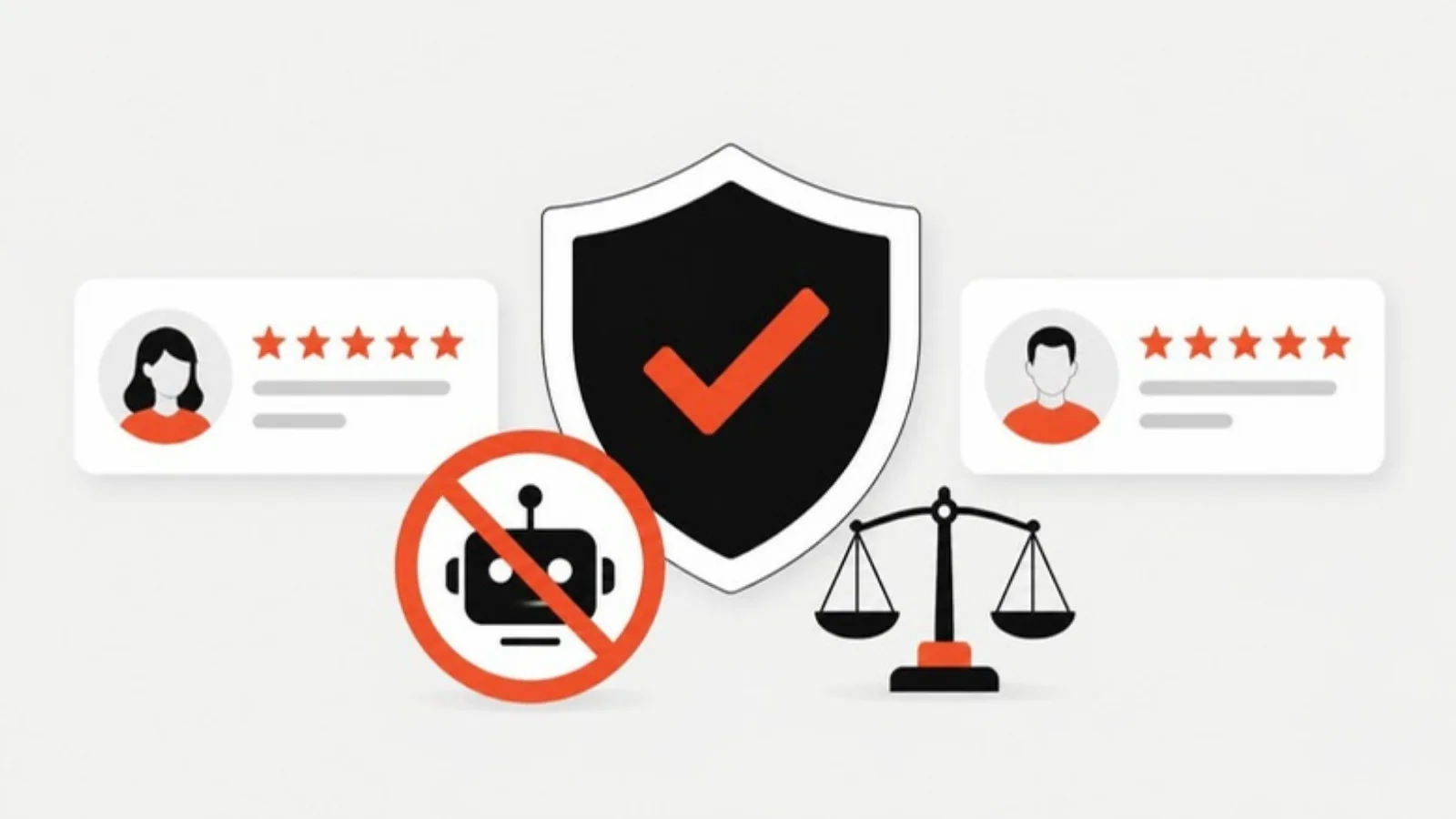
The FTC's rule on fake reviews has been in force since October 21, 2024, and it applies to small businesses as much as big brands. It bans fake reviews, paying for reviews of a particular sentiment, hidden insider reviews and bullying people into removing negative ones. Asking every customer for an honest review is still completely fine.
What does the FTC rule ban?
The FTC's announcement of the final rule lists the practices it prohibits:
- Fake or false reviews, including AI-generated ones and reviews from people with no real experience of the business. Businesses can't create, sell, buy or spread them when they knew or should have known they were fake.
- Buying reviews of a particular sentiment. Businesses can't offer compensation or incentives "conditioned on the writing of consumer reviews expressing a particular sentiment," whether positive or negative.
- Undisclosed insider reviews. Reviews from officers, managers or employees must "clearly and conspicuously disclose" their connection to the business. There are also limits on managers asking relatives or staff for reviews.
- Review suppression. Using unfounded legal threats, intimidation or false accusations to stop or remove negative reviews, or claiming the reviews you show are all of them when negative ones were hidden.
- Company-controlled "independent" review sites that pretend to be neutral.
- Fake social influence, such as buying bot followers or views to look more popular for commercial purposes.
When did it take effect, and what are the penalties?
The rule was published on August 22, 2024 and took effect on October 21, 2024. It lets the FTC seek civil penalties against knowing violators. When the rule was finalized, the maximum was almost $52,000 per violation, and the amount is adjusted for inflation each year.
How Google's own rules compare
Google's rating manipulation policy goes further in one important way: it bans any incentive for a review, such as payment, discounts or free services, not just incentives tied to a positive review. It also prohibits selectively asking happy customers for reviews (often called review gating), staff review quotas and asking for reviews with specific content. Breaking Google's rules can get reviews removed or your profile restricted.
What's still allowed?
- Asking every customer for an honest review, in person, by text or by email.
- Sending a direct link to your review form.
- Thanking reviewers and replying to every review, positive or negative.
- Showing genuine reviews on your website, as long as you don't hide the negative ones while implying you show them all.
- Responding to a negative review and offering to fix the problem.
A compliant review process for a home service business
- Ask every customer after every completed job, not just the ones who seem happy.
- Offer nothing in return: no discounts, no gift cards, no prize draws for reviewers.
- Keep staff out of it: employees and family members shouldn't review the business.
- Never script reviews or ask customers to mention specific words.
- Reply to every review, calmly, and take disputes offline.
- Document the process in your team handbook so new hires follow it too.
For the step-by-step routine, including when to ask and what to send, see our guide on how to get more Google reviews.
Where reviews do the most work
Reviews help you rank in Google Maps and convince people to call. On the lead generation websites we build, real reviews sit beside every call button and quote form, linked to their source so visitors can check them. Our local SEO service includes a compliant review request setup. Get a fixed quote.
This article is general information, not legal advice. Talk to a lawyer about your specific situation.